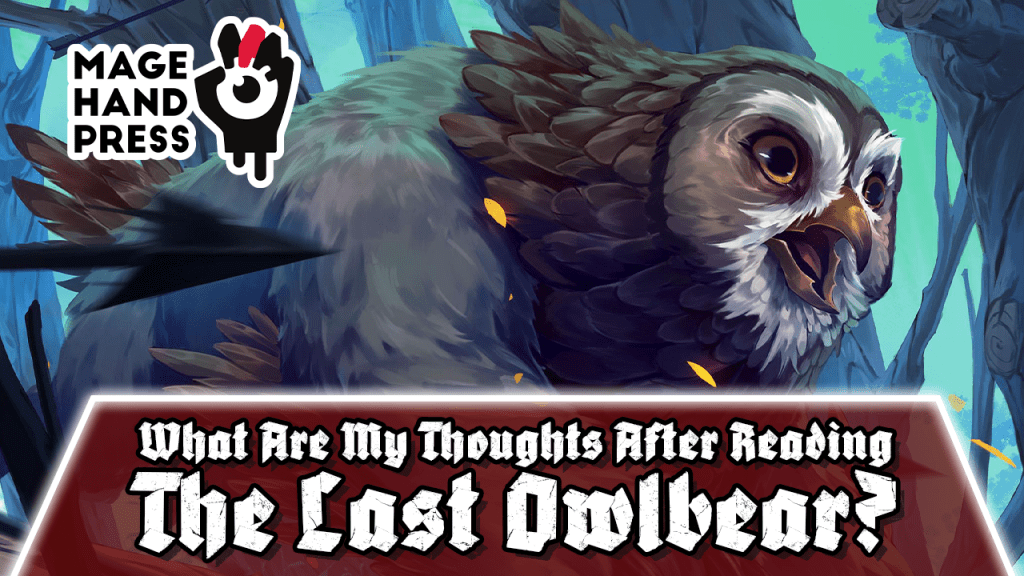
At GenCon this year, I walked by the booth for Mage Hand Press, a well known 3rd Party Publisher (3PP) of Dungeons & Dragons supplemental materials. As I was walking by, I saw the Owner & Editor-In-Chief, Mike Holik there, and right in front of him was a book that captured my attention: The Last Owlbear.
Now, if you know anything about me and Dungeons & Dragons, you know that there are a few things about me that will always ring true: I love Barbarians, I love Dragonborns, and I love owlbears.
“Whoa, The Last Owlbear?” I said to Mike.
“Yes!” he said with enthusiasm. He picked up a copy and said, “so let me tell you about this adventure…”
“Dude, it’s about an owlbear, you don’t have to tell me anything about it – I’m already sold,” I said with full seriousness and laughter.
After buying my copy of The Last Owlbear from GenCon, I gave it my full attention (about a week after GenCon – I was still recovering from it!). A 44-page adventure for levels 5-6, The Last Owlbear takes the players through the challenge of trying to find and rescue the remaining owlbear in the world to try to prevent its extinction. Along the way, the party will face challenges familiar and new, some involving combat while others requires skills and clever solutions.
This adventure can be essentially used in an D&D setting but with the obvious caveat is that owlbears are not only rare but are on the verge of disappearing from the world completely.
After finish reading this short adventure, I wanted to share my thoughts about what I really enjoyed about this book that stood out for me, and what you should be mindful of if you decide to run this adventure.
WARNING: Spoilers ahead. If you plan to play in this adventure and want to be surprised, stop reading now.
WATCH THE VIDEO REVIEW
Want to watch the video review instead? Check out the YouTube video below.
A BRIEF DESCRIPTION
The Last Owlbear, created by Mike Holik, Lucas Zellers, and Benjamin Ghita, is a four chapter mini adventure for 5th to 6th level characters using the Dungeons & Dragons game system. You can play this as a standalone adventure or, depending on the world and setting you’re playing in, can be added into an existing campaign of yours.
Set behind the backdrop of a world where owlbears have slowly been dying out due to environmental destructions, a world truth about this adventure is that no one has seen an owlbear in over 50 years. But the party’s patron, an arcana alchemist named Priya Saran, has received word of a sighting of an owlbear nearby the forests of Mosswood. After Priya urges the party to join a caravan to find and rescue the owlbear to bring back to her so she can try to repopulate the species. But along the way, the party will face challenges, ranging from encountering other rival parties to confronting fantastical creatures and lands, to coming up with practical solutions for barriers along the way.
This adventure includes the three pillars of D&D: Exploration, Social (Roleplay), and Combat. You’ll find plenty of this in The Last Owlbear, but it also includes non-violent challenges as well where your skills and background can definitely come handy in this adventure!
CHAPTER 0: “INTRODUCTION”
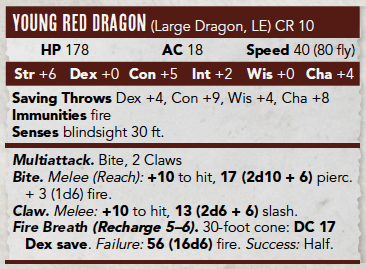
In the “Introduction” chapter, I really enjoyed how Mage Hand Press showed that not only do they include stat blocks of the creatures that the party may possibly combat, but they redesigned it to be compact and easier to read, giving you more concise wording and phrasing for what you need to know to run that creature in your adventure. It reduces extraneous space on the page as well as extraneous verbiage in some cases for the creature’s stat information and abilities, very similar to what you might see in an Adversary stat block for Daggerheart.
I also enjoyed the fact that the Introduction chapter includes a list of content warnings for people to be aware of. This maybe common for 3rd party publishers, but this is the first time I’ve seen something like this, and I love to see this as a common standard practice for all adventure and campaign books.
One of the things to be mindful of about this chapter (and essentially, the entire adventure) is that it requires the world lore to include the extinction of owlbears to be real. The book does have a sidebar about how to explain the issues with trying to cast a spell like True Resurrection on owlbears if someone asks about that. It’s important to note that this adventure is centered around the reality of how deforestation and other human activity affects wild life and species, so this is a key component of the adventure. But my suggestion is, if you want to use this in your campaign where this isn’t a reality, you can still use this by changing the owlbear into a particular species of owlbear, or that the party is requested by someone from another world that has this reality caked in. So it’s still possible to use this if your world setting doesn’t fit this idea of owlbears going extinct, but it should be an easy fix.
CHAPTER 1: THE CARAVAN
This chapter has a strong start for the adventure. The party starts out in a caravan with other NPCs, and on their trek to the Mosswood, they come across a few encounters and hazards. The adventure gives you six options and suggest you use three of them, with further suggestions on which specific ones to use for the players to introduce their characters. The encounters and hazards range from a simple roleplay scene where they share a story from their characters past (and earn Inspiration) to surviving a collapsing bridge, and even an encounter that may delay their journey if someone gets touched by a Midas Toad. It’s a really strong start for an adventure and to get them into action quickly for your first session.
Before running this chapter, I feel like it would do your table some good to really emphasize that this is going to be a long trek to your destination and that you might run into some hazards or nuisances or dangerous creatures along the way. Have the caravan leader NPC, Melville Bannermore, or any other key NPC listed in this adventure be the one to share this information. That it’ll take several days and who knows what you’ll face during that time. This helps set the tone and the expectation that there will be some sort of encounters that they’ll run into. Otherwise, not knowing to expect that can make it feel like a slog, especially if you do more than the 3 encounters recommended (or all 3 are the longer options).
Another thing to know about this chapter ahead of time is that even though the book states it gives you all the information you need in the book or publicly available through the SRD, it does include a unique creature from Mage Hand Press (a Dodo) that can be found in another sourcebook of theirs, Book Of Extinction. The good news is, this type of creature isn’t really critical to the storyline, so you can change it to another Feywild creature type if you want and it won’t change anything if you want to keep it with what you have access to for running this adventure.
This chapter also gives us the scenario “Bonfire Night” at its closing. As you can guess, it happens when the party is about to take a long rest before going into Mosswood Forest prior to trying to find the owlbear. When this happens, you’ll see that the caravan party are doing some downtime activities before they take a rest which the party can also participate in, and they will also notice that there’s another campfire out in the distance that they can check out as well, too.
I really enjoy having this scenario because it does a few things here. First, it gives party members something a bit more narrative to do during their downtime than simply going to bed. But they can also earn and affect the adventure based on what they decide to do. For example, if they visit the leader of the caravan, they can participate in a card game that has a roleplay element to it and potentially earn Inspiration. They can also buy weapons and supplies from someone that can be helpful in their quest the next day, as well as earn money and inspiration from a competition from the other caravan members. I think there’s a lot of great opportunities here that can make this part of the adventure very cinematic as memorable, especially if the players decide to visit the distant campfire, and it gives players a big of agency to do something they want to do without having to be with the party.

CHAPTER 2: THE HUNT
The highlights of Chapter 2: The Hunt are the Hunt Stages and the use of a Threat DC. The Hunt Stages are all about trying to capture the owlbear (obviously) in ways that make narrative and mechanical sense. The first stage is all about trying to find where the owlbear might be. The characters can help the caravan with various skills check (individual and group checks) and what they roll and decide as a party can impact not only where they go but how the later stages are affected as well. It has a series of mechanical and narrative challenges that I think makes this part very interesting and engaging for players that really brings it to life. Eventually, the party should find an owlbear’s nest. Once they do, they can try to lure the owlbear to a trap they’ve laid for it to capture it in a cage they have for her. The final stage is the act of getting her in the cage to catch her.
What makes the Hunt Stages really interesting though, is how the Threat DC interacts with the story here. The Threat DC is a counter that is introduced in Stage 1. It starts at 12 and can increase or decrease by how poorly or well the characters’ attempts to prep the trap for the owlbear goes. For example, if they try to lay out some bait for the Owlbear with a Dexterity (Stealth) check and fail, then the Threat DC goes up by 1. The characters can move on to Stage 2 once they have 3 successful checks or the Threat DC makes it to 15. The Threat DC is then used as the Difficulty Class for skill checks in Stage 2, which features a series of challenges while being chased by the owlbear.
I really enjoy having the Threat DC because it really helps bring a structure to a narrative to follow that really shows how the players successes and failures actually affect the outcome of what happens next. It’s a great idea that you can port into your other games to help you create a series of complications for your players to overcome in order to achieve their goal, rather than have it be so open ended that the players (DM included) is clueless as to what to do. It’s a technique I think I’ll start using in my other games for sure!
CHAPTER 3: DANGEROUS CARGO
Chapter 3 is where we get to the climax of the story. Before we get to my favorite part of this chapter, there are a few things that I want to point out that I think is helpful to keep in mind.
In the section Pay Dirt, the party is confronted by a rival party, the Bramblethorn Company (the players may have met them in Chapter 1). They try to trick the player characters by convincing them that a chest they have includes a huge amount of treasure and are willing to give it to them if they hand over the owlbear. This section covers what happens if the players accept the offer, but no guidance on if they refuse the offer. So be prepared to come up with how the party responds to this.
Another thing to note is in the section Doogie-Two Heads. The party is confronted by a group of bugbears and an ettin. The section is very comical in nature and I like it, but one piece of this encounter says that if the characters succeed on an Insight of Investigation check, then they can determine that the ettin is being paid only with a new club because his current one is infested in termites. It isn’t quite clear how one could determine that’s what they’re being promised for payment, so it may make a bit more sense to say that the player ascertains that they must be getting paid for confronting the party because the ettin seems to have a special relationship with their club, which is rotting away.
My favorite part of this chapter is The Alchemist’s Tower section, where we reach the final battle between the player characters and the antagonists of the story, The Bramblethorn Company. The wizard of the rival party, Erasmus Bax, holds Priya hostage on the top of the tower. He demands an exchange between the owlbear and the alchemist; otherwise he pushes her off the ledge to her death.
This encounter gives a few options on how they can save their friend, which can include deception, distraction, or simply attacking the rival party. Some options does cause Bax to push Priya off the ledge, which triggers a unique Initiative round where the player characters can take a round to attempt to save their friend. The party can get really creative with it, but Bax will attempt to counterspell any spell that tries to save Priya or attack him. The adventure does say that if all attempts to save Priya fail, then she does die when she hits the ground, but it also gives an option on how you can have her be saved at the last second by her Familiar, in case you don’t want her to die. Then, when combat inevitably breaks out, the party could potentially try to convince the owlbear to join the fight if they wish. If at any point Priya or the owlbear were to take a hit that would kill them, one of the NPCs can be used as a final act where they dive in the way and take the killing blow instead.
I always enjoy a combat encounter that adds a complication as well as ways to interact with the world around the characters that challenges thee party beyond just hack and slash. There’s a lot of options here that gives players the opportunity to get creative with their character’s abilities, and so it makes me excited to see how my table will play this encounter.
Regarding this encounter, however, there are a couple of things to keep in mind. First, the party arrives at the tower with the caravan that they’ve been traveling with throughout this adventure. They’ve faced dangerous creatures and monsters and hazards. But when they get to this part of the story, they don’t participate in the fight. In fact, they run to the edge of the battleground. It feels as though they’re afraid of the fight, which wouldn’t make sense since they have gone up against dangerous creatures earlier. As a Dungeon Master, it makes sense why you would do this practically from running an encounter. Narratively, that may be a bit difficult to explain. What I would propose is to have Bannermore (the head of the caravan that was hired by Priya) give the rest of the caravan their pay when they’re about a mile away from the tower.
Another thing to keep in mind is that at the end of the encounter, the party could find magic items on the Bramblethorn Company, such as a +1 Shield and bracers of archery. This is the final combat scene so if you are running this adventure as is, it may not really be helpful for the characters, but this is a great way to give rewards if you are using this adventure inside your campaign.
CHAPTER 4: THE EXPERIMENT
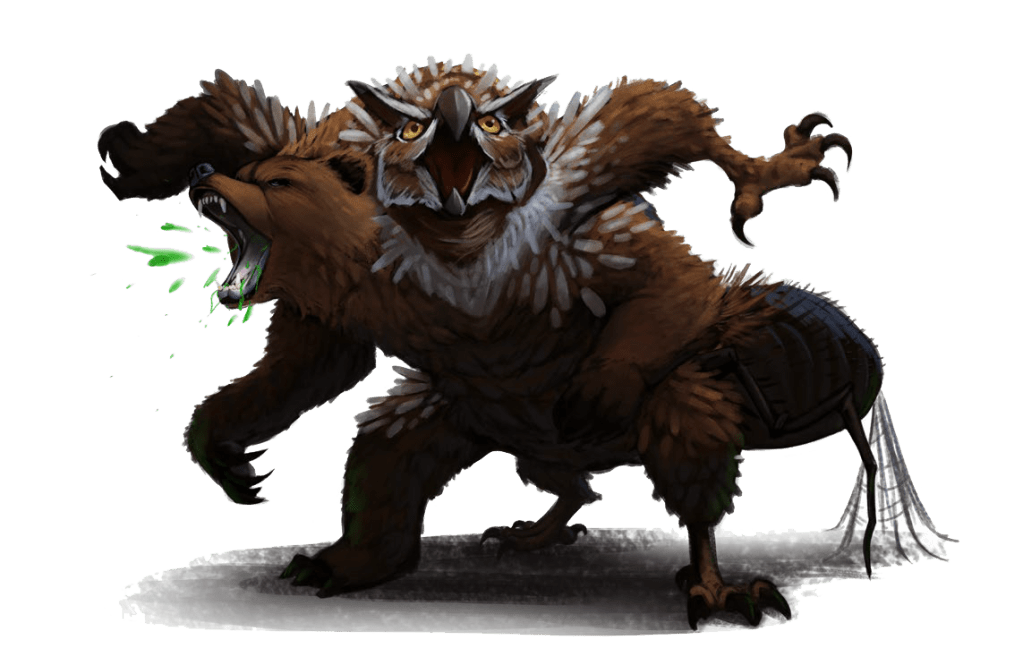
The final chapter of the adventure is where we get our resolution. Priya asks the party to help her try to clone or recreate an owlbear in order to try to save their species and it can go hysterically and horribly wrong. One of my favorite parts about this chapter is how the results of the players’ skill checks will determine how monstrous Priya’s first attempt of an owlbear gets. The party will create a Bearowl Chimera. During this process, their skill checks determines if the monster will have two heads, eight legs, web and acid spray, which each of these gives the monster an additional ability. It will fight to the death, but it’s a lot of fun to think about how you’re fighting a monster that you essentially helped create.
One challenge I do have about this chapter is the section Transmutation Cocktail. This is when the party attempts to recreate the owlbear using a mimic. This section particularly requires the players to try to determine the right amount of potions to give the mimic based on the color of the potion. This is probably the most confusing part of the adventure for me, trying to figure out how to do this in the game. It requires players to have an idea on how colors interact with each other (e.g. the relationship between cyan and magenta), and it’s a bit of a challenge if you don’t have this prior knowledge (to be fair, they do write in how you can help them but it’s as a final hint). Plus it becomes an accessibility issue for those who are colorblind (they do have a paragraph about how to handle that at the table for your players, but what if the DM is colorblind?). I applaud their attempt in making a kind of puzzle or challenge that requires a bit more than an ability check, but I think I will either skip this part of the adventure or replace it with something else.
CONCLUSION
Although the adventure has its challenges, they are very, very minuscule compared to all of the exciting beats of the story. This is an adventure I plan to run for my friends and family, and I have a feeling that not only will I run it multiple times, but I’ll use some of the unique ideas and mechanics in here for my other campaigns.
 Crit Hit The Giant